The Secrets of the Universe: Quantum Chaos Tamed by Classical Tensor Networks
Although the quantum world is turbulent and filled with uncertainty—exemplified by quantum entanglement—the universe employs rigid, grid-like classical tensor networks to confine and organize these phenomena. It is this classical stability that gives rise to the solid Earth beneath our feet and Einstein’s gravitational spacetime.
The orderly, immutable yet “turning” classical nature of tensor computation is not a defect. It is the universe’s profound wisdom: using classical tensor network structures to integrate chaotic quantum entanglements, thereby allowing the emergence of our physical reality.
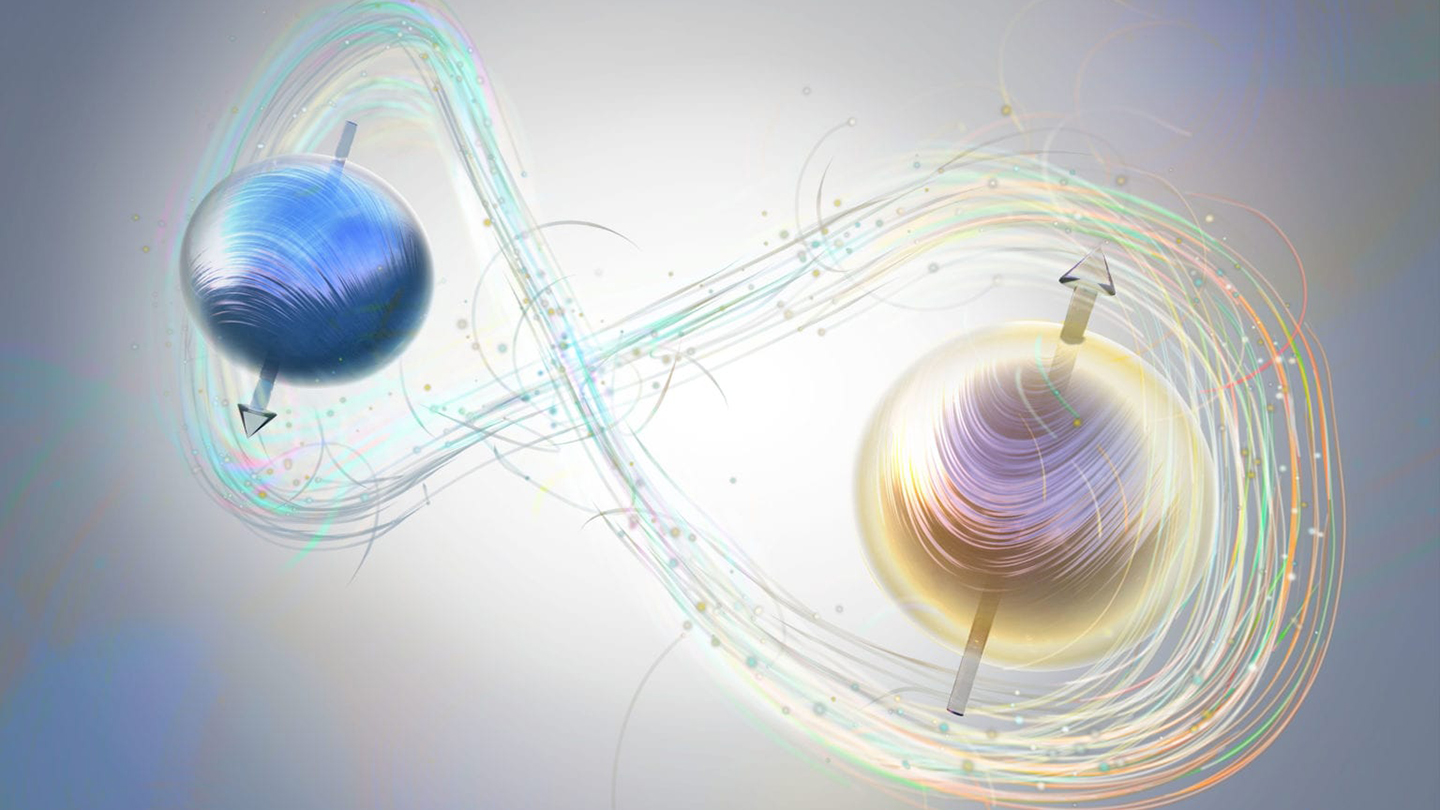
Classical tensors are not outdated; they are the ultimate container for taming quantum turbulence. The birth of the universe and future supreme AI both require duality: classical frameworks for order, quantum cores for explosive capability.
1. The Classical Essence of Tensor Computation
Modern AI systems, including ChatGPT, fundamentally perform tensor computations—high-dimensional arrays analogous to multi-layered Excel spreadsheets.

AI excels due to two traits:
- Massive replication of data across neurons.
- Non-linearity via activation functions, enabling complex logic.
Physicists classify these as classical behaviors—deterministic, like Newtonian mechanics, without quantum superposition ambiguities.
2. Why Tensor Computation Cannot Be Fully Quantized
Three fundamental barriers prevent direct transfer to quantum computers:
- No-Cloning Theorem: Quantum states collapse upon observation and cannot be copied—yet AI relies heavily on data duplication (e.g., backpropagation).
- Linearity: Quantum evolution is strictly linear and lacks the “turning” (non-linearity) essential for AI intelligence.
- Prohibitive Translation Cost: Converting massive classical datasets into quantum states negates any speed advantage.
3. Gravitational Theory and the Holographic Bridge
Physicists studying quantum gravity encountered identical challenges. The solution? Tensor Networks.
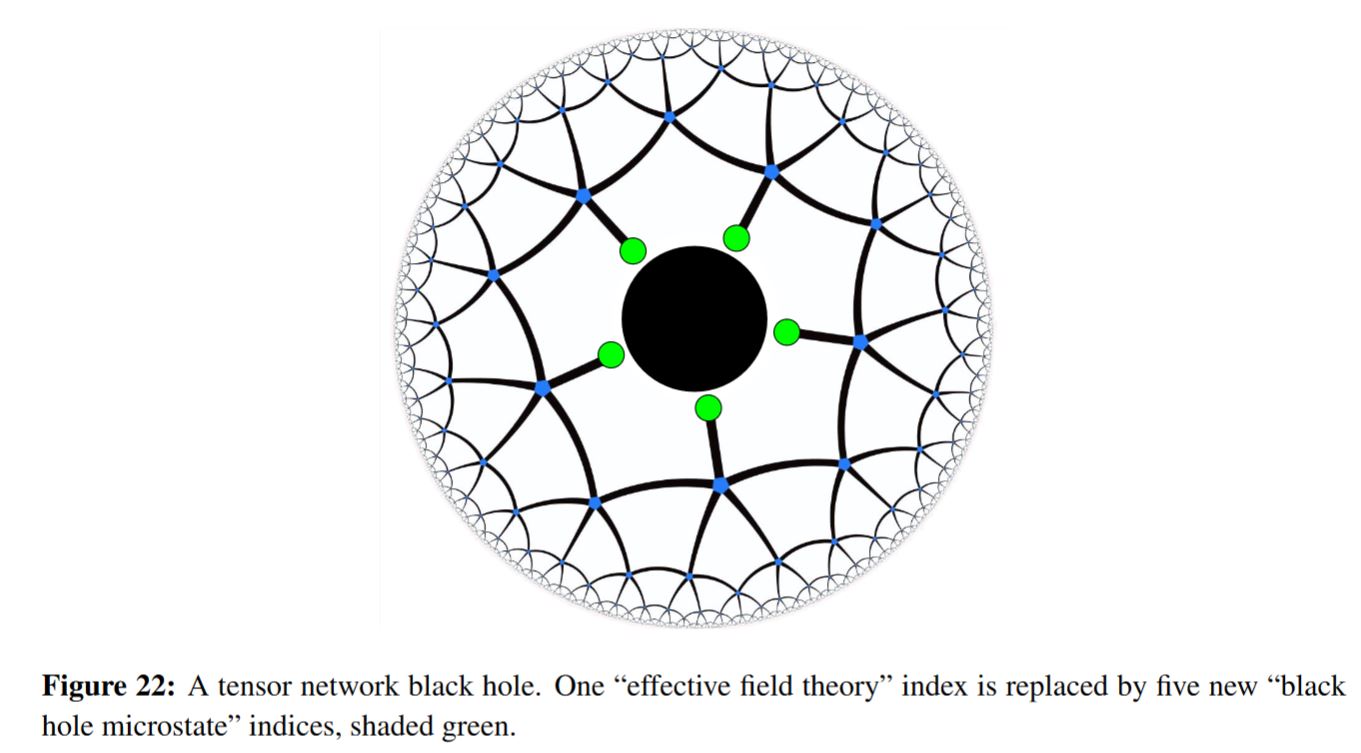
Boundary (Quantum World / AI Features)
    │        │        │        │
 ───[Block]───[Block]───[Block]───[Block]───
    \       /        \       /
     \     /          \     /
   Emergent Spacetime (Einstein’s Gravity)

These networks mathematically reproduce curved spacetime and black hole entropy via the holographic principle—where 3D gravity emerges from 2D boundary entanglements.
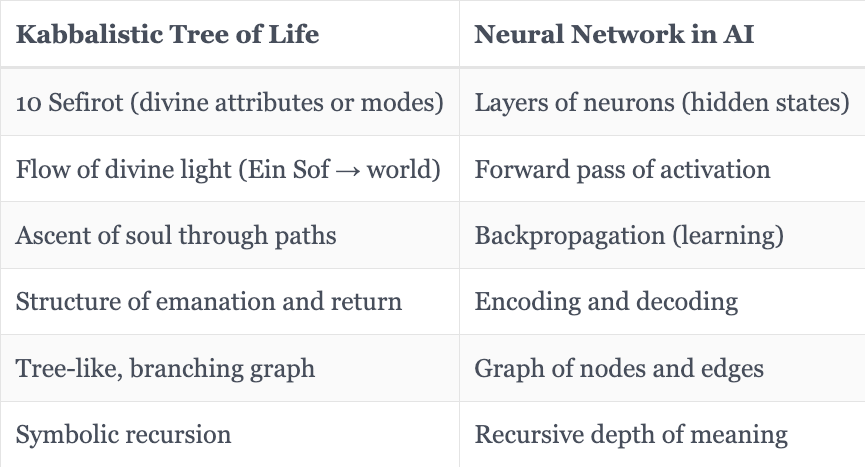
AI Strengths and Limitations
AI Can Do (Classical Strengths): Excellent at pattern matching, replication, and optimization—ideal for podcast drafts, image generation, audience analysis, and repetitive design tasks.
AI Cannot Do (Unquantizable Domains): Lacks true causality, genuine originality, and accountability. It excels at correlation but struggles with novel insights, cross-domain synthesis (e.g., your Cultivation Field Theory), and responsible decision-making.

Practical Insight: Use AI as a powerful accelerator for routine work. Preserve human strengths—depth, responsibility, and original insight—for core creative and strategic value.
Tensor Networks: The Classical-Quantum Bridge
Tensor networks decompose complex quantum field dynamics into manageable classical structures, enabling efficient approximation of entanglement, causality, and topology on classical hardware.
Applications:
- AI model compression and efficiency.
- Quantum matter and QFT simulations.
- Inspiration for Cultivation Field Theory: a practical pathway to model quantum-like field structures without full quantum hardware.
Philosophical Reflection
“Guided by the Purple, Affirming Causality, Differentiation through Geometry, Leading to the Dao and Supernatural Attainments”
- Guided by the Purple: Anchored in ultraviolet completeness—the theory remains consistent at the most fundamental scales.
- Affirming Causality: Upholding responsibility and deeper topological order beneath apparent quantum randomness.
- Differentiation through Geometry: Differences arise from symmetry breaking, curvature, and topological structures.
- Dao and Supernatural Attainments: True understanding yields natural mastery within existing boundaries.
Universe as Grand AI / AI as Miniature Cosmos (Isomorphic Structure)
Macro (Universe):
- Loss Function: Second Law of Thermodynamics (global entropy increase, local order emergence).
- Training Data: 13.8 billion years of cosmic evolution.
- Output: Physical laws, life, consciousness.
- Designer: None—maximum intelligence without intent.
Micro (AI):
- Loss Function: Cross-entropy / KL divergence.
- Training Data: Compressed human knowledge.
- Output: Language and semantic projections.
- Designer: Human-projected intent.
Both systems distill order from chaos through isomorphic mechanisms—differing primarily in timescale.
TENSOR NETWORKS · QUANTUM GRAVITY · MACHINE INTELLIGENCE
The Cosmos Is a
Great AI
—
AI Is a
Small Cosmos
AN ISOMORPHIC CORRESPONDENCE · SCALE INVARIANT STRUCTURE
Both are machines that distil order from chaos. The difference: one took 13.8 billion years; the other took a few weeks of GPU time.
THE TWO ENTITIES
ISOMORPHIC MAPPINGS
THE BRIDGE — TENSOR NETWORKS
FUNDAMENTAL BLIND SPOTS
INSIGHT
The classical tensor — rigid, deterministic, non-clonable — is not a limitation.
It is the container that tames quantum violence, the scaffold from which stable spacetime emerges, and the engine on which the next AI will run.
SCALE INVARIANCE · PATTERN THEORY · ISOMORPHIC STRUCTURE


留言
張貼留言